Why Dental Health Is So Important for Pets
Dental care for dogs and cats is about far more than fresh breath. Plaque and tartar build-up can lead to gum inflammation, infection, loose or painful teeth, and chronic discomfort. If left untreated, bacteria from the mouth can enter the bloodstream and may affect vital organs such as the heart, liver and kidneys.
Cats are particularly good at hiding dental pain, and many will continue eating despite significant discomfort.
Common Signs of Dental Disease in Dogs and Cats
Poor pet dental care can lead to serious consequences. Dental disease can affect dogs and cats of all ages, including puppies and kittens, although the signs may vary depending on age and dental development. Signs include:
- Bad breath
- Red, swollen or bleeding gums
- Yellow or brown tartar on the teeth
- Dropping food or chewing on one side
- Pawing at the mouth or face
- Reduced appetite or weight loss
- Behaviour changes, such as irritability or withdrawal
What Causes Dental Problems in Pets?
The main cause of dental disease is plaque – a sticky film of bacteria that forms on the teeth. If plaque isn’t removed, it hardens into tartar, which irritates the gums and allows infection to develop below the gumline.
Some pets are more prone to dental disease, including:
- Small and flat-faced dog breeds
- Cats with crowded teeth
- Older pets
- Pets fed mainly soft food
- Pets without regular dental care routines
How to Look After Your Pet’s Teeth at Home
A consistent dental routine should start early. Puppy dental and kitten dental care help build positive habits and lay the foundations for healthy adult teeth. Here are our top tips for great pet dental care!
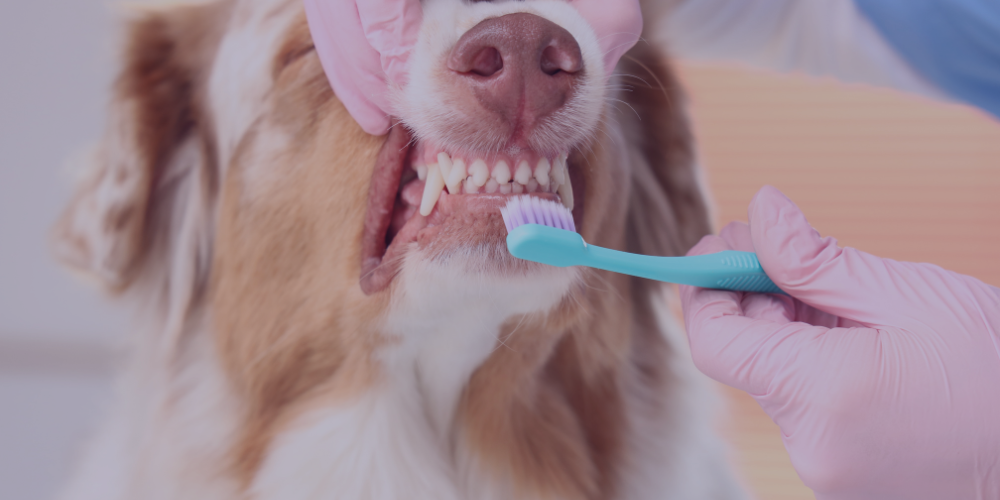
Tooth Brushing:
Daily tooth brushing is the gold standard for preventing dental disease. Use a pet-specific toothbrush and toothpaste – never human toothpaste.
Dental Diets and Chews:
Veterinary-approved dental diets and chews can help reduce plaque and tartar build-up.
Regular Mouth Checks:
Getting your pet used to gentle mouth checks at home makes it easier to spot problems early.