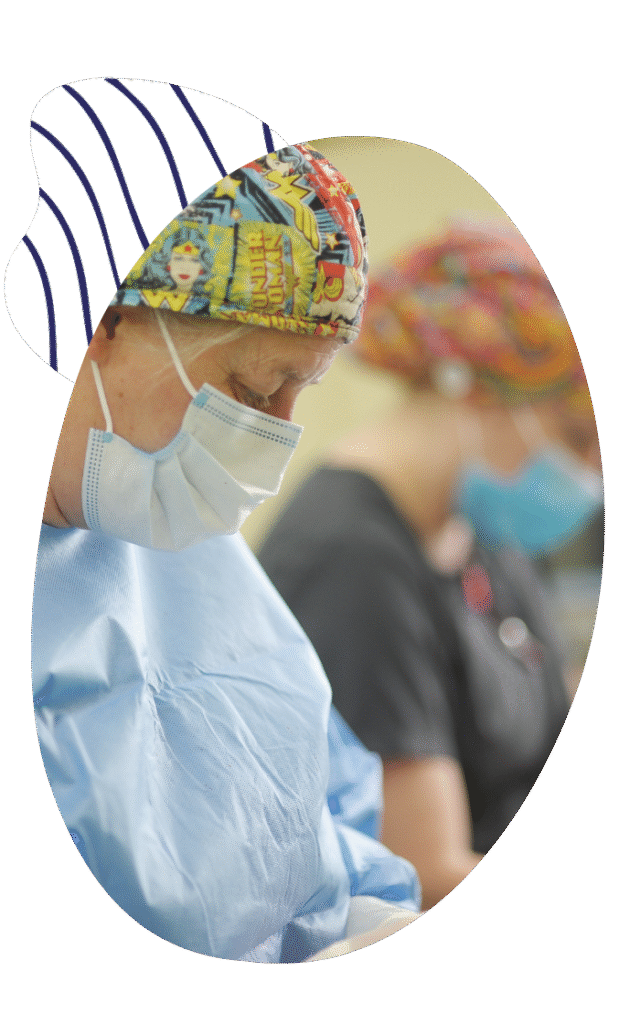
Surgical services offered by our expert team
At Cockburn Vets, we offer a wide range of surgical procedures – from routine neutering to advanced techniques such as:
- Keyhole (laparoscopic) surgery
- Gastrointestinal and bladder operations
- Tumour removal
- Orthopaedic surgery (including MMP [Modified Maquet Procedure] used used to treat cranial cruciate ligament tears in dogs), more complex fracture repairs and joint surgeries
- TECA (Total Ear Canal Ablation): A procedure used to treat severe, chronic, and irreversible ear disease.
Your pet’s safety is our top priority. We may recommend pre-anaesthetic blood tests, which can be run quickly in our in-house laboratory to ensure their liver and kidneys are functioning well before surgery. We can also provide intravenous fluids on the day to support your pet throughout their procedure.
While under general anaesthetic, your pet will be continuously monitored by our experienced veterinary and nursing teams. We use modern multimodal monitoring equipment to maintain the highest standards of safety and care.
Ensuring your pet is kept as comfortable and pain-free as possible is essential. Our team uses effective pain-relief protocols and continuous monitoring to support your pet throughout their surgery and recovery.
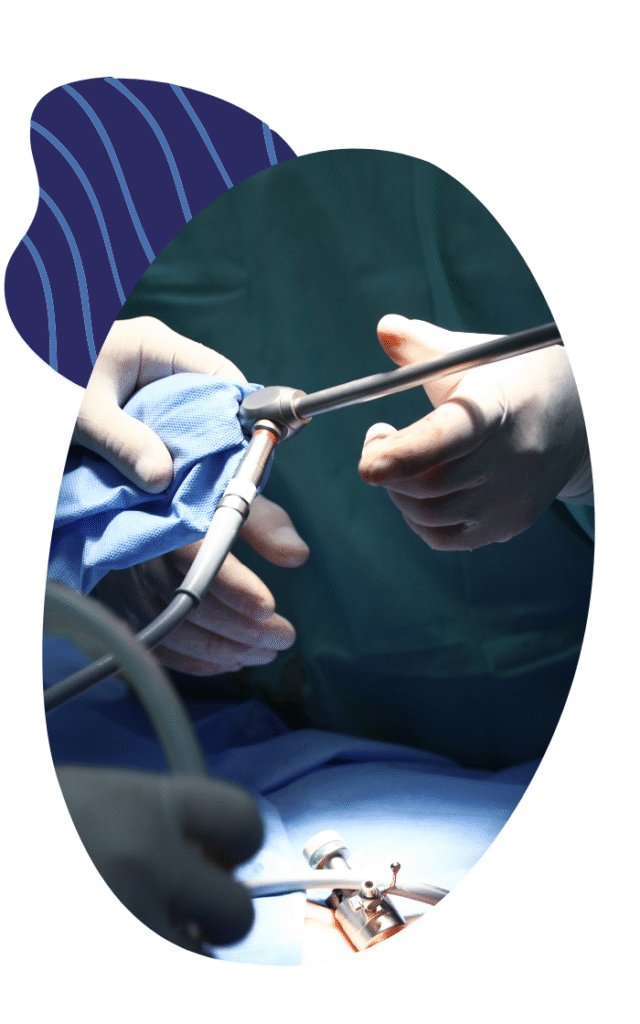
Laparoscopic (Keyhole) Spays
As part of our commitment to clinical excellence, we offer a minimally invasive option for neutering female dogs: the laparoscopic (keyhole) spay. In addition, our veterinary team has used this technique for other advanced procedures such as liver biopsies, gastropexies (to help prevent stomach torsion), exploratory surgeries, and the removal of abdominal testicles.
Laparoscopic surgery, long used in human surgery, is associated with significantly reduced pain, quicker recovery times, and fewer complications, so it is a popular choice with pet owners. Due to the specialist equipment and training required, laparoscopic spaying isn’t a procedure offered by all veterinary practices, but we have seen first-hand how this minimally invasive technique can support a faster, more comfortable recovery. We are proud to offer this modern technique as part of our comprehensive surgical services.
We are strong advocates of preventative healthcare, and research has shown that neutering can contribute to longer lifespans in both male and female dogs. While traditional spaying is a routine procedure, it involves an invasive abdominal surgery. Our veterinary team has extensive experience in laparoscopic surgery, having performed hundreds of keyhole spays.
What are the benefits of a laparoscopic spay?
Traditional spays require a larger abdominal incision, which can cause bruising and discomfort. In contrast, laparoscopic (keyhole) spaying uses two tiny incisions. One incision is for the camera, which displays a clear magnified view on a monitor for the surgeon. The second incision is for instruments which are used to remove the ovaries. This technique removes only the ovaries, which safely prevents seasons, unwanted pregnancies, and serious uterine infections such as pyometra. Research shows that removing the uterus is usually unnecessary and can increase post-operative pain, so we only remove it if there are medical concerns.
Overall, your pet will benefit from:
- Less pain
- Faster recovery and return to exercise
- Minimal scarring
- Lower chance of infection
- Improved wellbeing
FAQs
Does it cost more?
We use the same equipment as our friends in the NHS, which means this surgery only costs slightly more, which is far outweighed by the benefits!
When should I spay my dog?
Three to four months after a season or at six months of age, before their first season.
Neutering
Neutering is one of the most important health decisions you can make for your pet. As vets, we recommend it not only to prevent unwanted litters, but also because it offers long-term health and behavioural benefits. Neutering can reduce (and in some cases eliminate) the risk of certain diseases, help manage hormone-driven behaviours, and support a healthier life. Our team is here to guide you through the process and help you choose the right time and approach for your pet’s individual needs.
Members of the Healthy Paws Club save 10% on neutering and also receive a wide range of other benefits and savings. If you need further information or would like to book to neuter your cat, dog or rabbit, then please call the practice on 01530 836654, and we will be happy to help.
Neutering Your Dog
Unless you’re intending to breed your dog, neutering will be an important consideration from about the age of six months (or 3 to 4 months after the first season in bitches). While it’s a routine, daily operation we carry out, it’s still non-reversible major surgery under general anaesthetic, so you need to weigh up the pros and cons. And don’t forget, our team are always on hand to help if you have any questions!
Bitch Spays
Pros
- No unwanted attention from roving male dogs = no accidental pregnancies
- Prevents pyometra, a serious, potentially life-threatening infection of the uterus that can affect your female dog when she gets older
- Prevents ovarian and uterine cancer
- Reduces the risk of mammary cancer the earlier in life you have her spayed
- We can use laparoscopic (keyhole) spay techniques that lessen the impact of the procedure
Cons
- It is major surgery and comes with the usual risks associated with general anaesthesia
- Potential urinary incontinence later in life – but this is actually pretty uncommon and can be controlled by drugs
- Some claim weight gain as a side-effect, but as ever, you can control this for your pet with good diet and exercise
Top Tips
- Most bitches will have their first season between six and 12 months
- We don’t spay bitches just before or just after the first season, as increased blood supply to the uterus and ovaries increases surgical risk, and for up to three months after the season ends, your pet may naturally develop a false pregnancy due to hormone imbalance
- False pregnancy symptoms include: lactation, low appetite, general agitation or ‘nesting’ behaviour like carrying toys to bed
- Best time to spay your bitch? Best practice says either at six months (subject to a thorough examination to check she’s mature enough) or preferably around three to four months after that first season, or after any post-season false pregnancy has passed
Dog Castration
Pros
- Prevents unwanted pregnancies and accidental litters
- Removes the risk of testicular cancer and reduces the risk of some prostate conditions, including benign prostatic enlargement.
- May reduce some hormone-related behaviours, such as roaming, mounting and urine marking
Cons
- Castration requires a general anaesthetic and, as with any operation, carries a small risk of complications
- Neutered dogs can be more prone to weight gain, although this can usually be managed with appropriate diet and exercise
- Castration is not a guaranteed solution for behavioural problems such as aggression or anxiety and, in some dogs, may make fear-related behaviour worse
When should my dog be castrated?
Neutering Your Cat
Breeders apart, we follow current guidelines from The Cat Group and the British Veterinary Association. We suggest that all female (queen) and male (tom) companion cats should be neutered from four months of age. Research from America indicates that both spayed queens and castrated toms live longer than their intact counterparts, are less likely to be hit by a car and are less likely to require treatment for an animal bite, by a very significant margin in all three categories.
As with a bitch spay, a cat spay is an ovariohysterectomy involving the surgical removal of the ovaries and uterus under general anaesthetic.
- No unwanted pregnancies or accidental litters – plus no noisy night-time mating disturbances
- Prevents tricky complications like caesarean section and serious conditions like mammary cancer and pyometra in females, and testicular cancer or prostate problems in males
- Reduces the risk of urine spraying and roaming that can end in death or injury in fights or on the road
Neutering Your Rabbit
There’s real truth to the old saying ‘breeding like rabbits’. A female (doe) can produce 20 or more offspring in a single year – that’s why neutering is very important for both does and bucks (male).
Rabbit neutering prevents unwanted pregnancies and helps manage behavioural issues such as urine spraying and aggression.
Most importantly, neutering a doe prevents uterine tumours, mammary gland tumours and uterine (uterus) infections. Rabbit uterine cancer and tumours are the most common cancer in a doe, with the risk rising to 80 per cent in rabbits 6 years old. Often these tumours also spread to other abdominal organs, lungs, skin, brain and bone and reduce lifespan. Neutering a buck rabbit prevents testicular tumours.
Top Tips
- We recommend neutering female rabbits between six and nine months old, and as early as four to six months old for neutering a buck
- While there is a higher anaesthetic risk for rabbits, we offset these risks with intravenous and subcutaneous fluids, and we send all rabbits home with pain relief and nutritional support

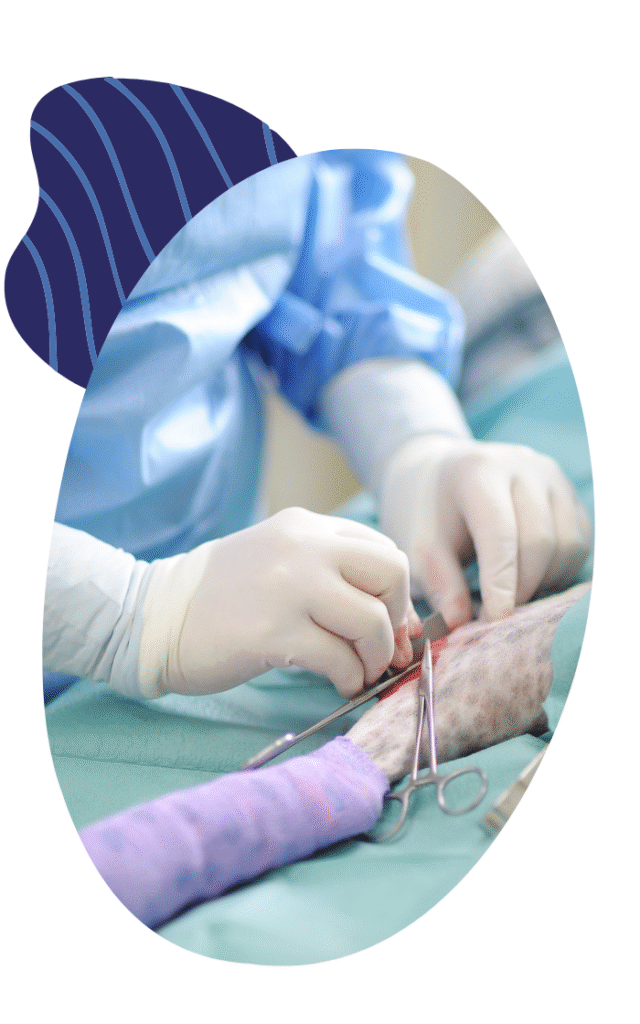
Orthopaedic Surgery
- Fracture repair
- MMP (Modified Maquet Procedure) – a surgical treatment for cranial (anterior) cruciate ligament rupture, a common cause of hindlimb lameness in dogs.
- RidgeStop™ surgery – a procedure used to treat luxating patella (slipping kneecap), helping to keep the kneecap moving correctly within its normal position.
Soft Tissue Surgery
- Mass and lump removal – from small skin masses to larger and more complex growths.
- Splenectomy – surgical removal of the spleen when required.
- Pyometra surgery – emergency surgery for a potentially life-threatening infection of the uterus.
- Gastrointestinal surgery – including surgery to remove foreign bodies or treat problems affecting the stomach and intestines.
- Anal gland removal (anal sacculectomy) – for pets suffering from certain persistent or recurrent anal gland problems.